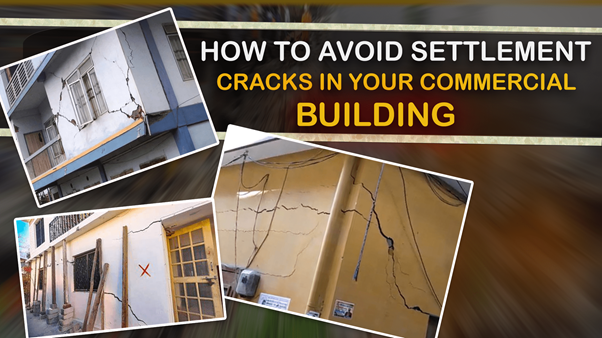
How to Prevent Settlement Cracks in RCC Buildings: 7 Expert Tips
A crack in a building is not always a structural emergency—but ignoring the reason behind it can turn a small warning into a costly problem.
Settlement-related cracking can occur when the ground or foundation system moves unevenly beneath a building. In commercial and RCC construction, understanding the causes of settlement and controlling them during planning and execution can significantly reduce long-term risks.
The important point is that crack prevention starts before the concrete is poured. Soil investigation, foundation design, drainage, compaction, construction quality and ongoing monitoring all play a role.
What Are Settlement Cracks in Buildings?
Settlement occurs when the soil beneath or around a building compresses or moves, causing part of the structure to move relative to another part.
When this movement is uneven, stresses can develop in walls, floors and other building elements, resulting in cracks.
Settlement does not always mean that a building is unsafe. The significance of a crack depends on factors such as its location, width, pattern, progression, structural element involved and the underlying cause.
That is why the cause of the crack matters more than simply filling the crack.
What Causes Settlement Cracks in RCC Buildings?
Settlement-related cracking can have several causes. Common factors include:
- Variable or weak soil conditions
- Insufficient soil investigation
- Poorly compacted fill
- Uneven foundation loading
- Changes in soil moisture
- Poor drainage around foundations
- Inadequate foundation design for the site conditions
- Changes to the surrounding ground or adjacent construction
In many projects, more than one factor can contribute to movement.
How to Prevent Settlement Cracks in RCC Buildings
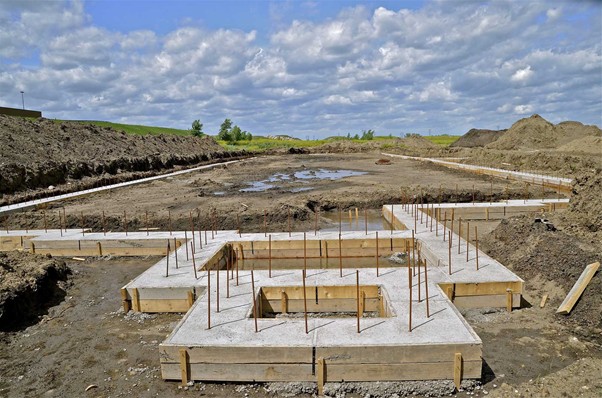
1. Start With a Proper Soil Investigation
The foundation can only perform as well as the ground supporting it.
Before designing the foundation, the project team needs reliable information about the sites soil conditions.
Different soils behave differently under load. Some soils may compress significantly, while others may have greater bearing capacity. Fill material can also behave differently depending on how it was placed and compacted.
A proper geotechnical investigation helps engineers understand the ground conditions and select an appropriate foundation approach.
What Should Be Evaluated?
- Soil profile and classification
- Groundwater conditions
- Allowable bearing capacity
- Settlement characteristics
- Presence of uncontrolled fill
- Variations in soil across the site
Indian Standard IS 1904 provides general requirements for the design and construction of foundations in soils, while soil classification is addressed by IS 1498. :contentReference[oaicite:1]{index=1}
Expert insight: A soil investigation is not just a formality for the project file. It can directly influence foundation selection, construction decisions and long-term building performance.
2. Design the Foundation for Actual Site Conditions
There is no single foundation solution that is correct for every site.
The foundation system should be selected based on the soil investigation, structural loads, building configuration and other relevant design requirements.
For example, the foundation approach for a lightweight structure on competent soil may be very different from the approach required for a heavily loaded commercial or industrial building on weak or variable ground.
Why Foundation Uniformity Matters
Where soil conditions or structural loading vary significantly, different parts of a building may experience different amounts of movement.
This can increase the risk of differential settlement and associated cracking.
Foundation design therefore needs to consider not only whether the soil can support the building, but also how the structure and ground are expected to behave together.
3. Never Ignore Soil Compaction and Fill Quality
One of the less visible causes of future settlement can be poorly controlled fill.
When fill is placed beneath floors, external areas or foundations, its performance depends heavily on the material used, moisture condition, placement method and compaction.
If poorly compacted fill later compresses under loading, movement can occur even when the structural concrete itself was properly executed.
Construction Checklist for Fill Areas
- Use suitable fill material.
- Place fill in controlled layers.
- Maintain appropriate moisture conditions during compaction.
- Verify compaction through appropriate field testing where required.
- Do not assume visually firm ground is adequately compacted.
Hidden reality: The ground beneath a finished floor is impossible to inspect easily later. Quality control during filling and compaction is therefore much cheaper than correcting settlement after the building is operational.
4. Control Water Around the Foundation
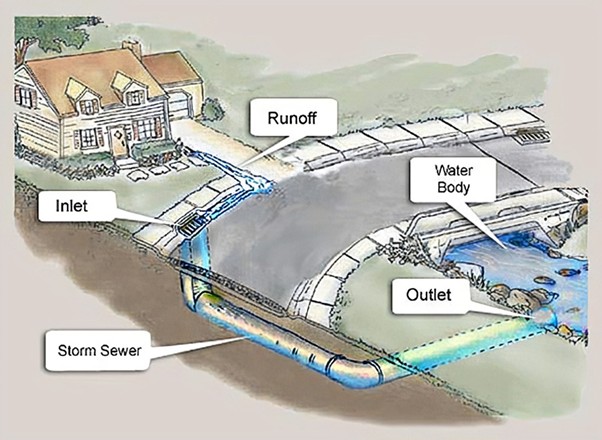
Water management is often overlooked until a problem appears.
Changes in soil moisture can influence the behaviour of certain soils, while uncontrolled water around foundations can contribute to erosion, softening or other changes in ground conditions.
Good site drainage should therefore form part of the buildings planning and execution.
Practical Water-Management Measures
- Provide suitable surface drainage.
- Avoid standing water near foundations.
- Maintain appropriate site grading.
- Control roof-water discharge.
- Inspect plumbing and drainage lines for leakage.
- Protect vulnerable foundation areas from uncontrolled water flow.
Important: Waterproofing and drainage solve different problems. Waterproofing can help control water penetration, while drainage manages where water goes. A building may require both depending on its design and site conditions.
5. Follow RCC Construction Quality Controls
Settlement is not the only reason a concrete building may develop cracks.
Concrete shrinkage, thermal movement, poor curing, reinforcement detailing, construction practices and other factors can also produce cracking.
That means preventing visible cracks requires quality control throughout the RCC construction process.
Important RCC Quality Checks
- Verify reinforcement placement against approved drawings.
- Check formwork alignment and stability.
- Use the specified concrete grade.
- Maintain appropriate concrete workability.
- Ensure proper compaction during placement.
- Follow appropriate curing procedures.
- Carry out required concrete testing and documentation.
IS 456:2000 is the Indian Standard covering the general structural use of plain and reinforced concrete. :contentReference[oaicite:2]{index=2}
6. Plan Drainage, Landscaping and External Works Carefully
Settlement problems are not always caused by the original foundation construction.
Changes made around a completed building can also influence ground conditions.
For example, major excavation near an existing building, uncontrolled irrigation, leaking underground services or changes in site drainage can alter conditions around the foundation.
Commonly Missed Areas
- New landscaping close to foundations
- Underground water leakage
- Improper rainwater discharge
- Excavation for neighbouring construction
- Changes in ground levels
- Heavy external loads added near existing foundations
Construction doesnt end when the building is handed over. Changes around the building can affect its long-term performance.
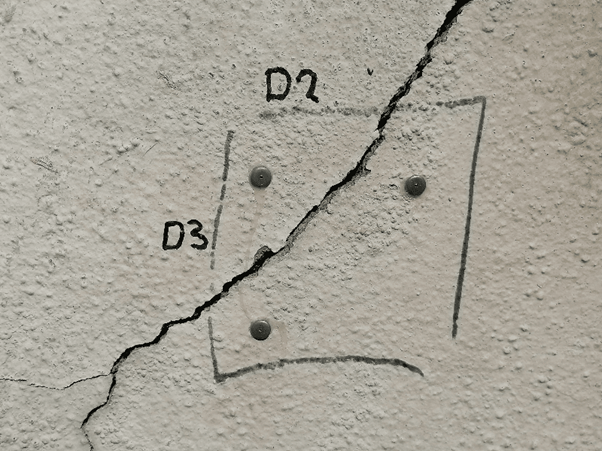
7. Monitor Cracks Instead of Simply Filling Them
If cracks appear, the first question should not be How do we fill this?
The better question is:
Why did this crack appear, and is it changing?
Some cracks may be cosmetic or related to normal material movement. Others may require investigation because of their location, pattern or progression.
What Should Be Monitored?
- Location of the crack
- Approximate width
- Length and pattern
- Whether it is widening
- Whether it appears in a structural element
- Whether doors, windows or floors are also showing movement
Where there is concern about structural performance or progressive movement, a qualified structural professional should assess the building rather than relying only on cosmetic repair.
Settlement Crack vs Other Building Cracks
Not every crack in an RCC building is a settlement crack.
| Possible Cause | Typical Observation | What It Means |
|---|---|---|
| Settlement | Cracking associated with differential movement | Requires assessment of soil, foundation and structural behaviour |
| Drying shrinkage | Fine cracks can develop as concrete or masonry loses moisture | May be related to material behaviour rather than foundation movement |
| Thermal movement | Cracks associated with temperature-related expansion or contraction | Requires consideration of movement and detailing |
| Water-related damage | Cracking, dampness, staining or deterioration | Requires investigation of the source of moisture |
| Structural distress | Cracking in important structural elements or accompanied by deformation | Should be professionally assessed |
Key lesson: Crack appearance alone is not enough to diagnose the cause. The location, pattern, progression and surrounding conditions matter.
Are Settlement Cracks Dangerous?
They can be—but not every settlement-related crack indicates imminent structural failure.
The risk depends on the magnitude and rate of movement, the affected part of the building, the foundation system, soil conditions and whether structural elements are involved.
Warning signs that justify prompt professional assessment can include:
- Cracks that are progressively widening
- Significant differential movement
- Cracks extending through important structural elements
- Noticeable floor or beam deflection
- Doors or windows suddenly becoming difficult to operate
- Visible separation between building components
- New cracks appearing alongside other signs of movement
If these conditions are present, cosmetic patching should not be treated as a substitute for diagnosis.
Common Mistakes That Increase Settlement Risk
- Skipping proper soil investigation: Designing foundations without sufficient understanding of site conditions increases uncertainty.
- Using uncontrolled fill: Buried fill may settle later if it was not properly selected and compacted.
- Ignoring water: Persistent leakage or poor drainage can change ground conditions.
- Copying a neighbouring foundation: Two sites can have different soil and groundwater conditions even when they are geographically close.
- Repairing the crack without finding the cause: A filled crack can return if the underlying movement continues.
- Assuming every crack is structural: Not all cracks have the same cause or severity.
Myth vs Reality: Settlement Cracks
| Myth | Reality |
|---|---|
| Every crack means the building is unsafe. | Cracks have different causes and levels of significance. They need to be assessed in context. |
| A good concrete mix prevents settlement. | Concrete quality is important, but settlement is primarily related to ground, foundation and structural behaviour. |
| More concrete means a stronger foundation. | Foundation performance depends on engineering design and ground conditions, not simply on adding material. |
| Filling a crack permanently solves the problem. | If movement continues, a cosmetic repair may fail again. The underlying cause needs to be understood. |
| The soil looks hard, so it is safe. | Visual inspection alone cannot reliably determine engineering soil properties. |
Expert Checklist: How to Reduce Settlement Risk Before Construction
- ☑ Conduct an appropriate geotechnical investigation.
- ☑ Understand soil and groundwater conditions.
- ☑ Select the foundation system based on engineering requirements.
- ☑ Control fill placement and compaction.
- ☑ Plan site drainage before construction.
- ☑ Control roof and surface water discharge.
- ☑ Follow approved structural drawings.
- ☑ Maintain RCC quality-control procedures.
- ☑ Monitor the building after completion.
- ☑ Investigate progressive or significant cracks professionally.
When Should You Call a Structural Engineer?
If you are unsure whether a crack is cosmetic or related to structural movement, professional assessment is the safest approach.
A structural engineer can evaluate the crack together with the buildings structural system and other evidence. Depending on the situation, the investigation may also require information about foundations, soil, drainage or surrounding construction.
Do not rely on crack filling alone when the building is showing signs of progressive movement.
Why Settlement Prevention Starts Before Foundation Construction
The biggest lesson is simple:
You cannot solve a foundation problem by focusing only on the finished wall.
Settlement risk is influenced by decisions made much earlier—during site investigation, foundation design, earthwork, drainage planning and construction quality control.
Once the building is completed, correcting a foundation-related problem can be significantly more disruptive than addressing the relevant risk during planning and construction.
How Saluja Contracts Approaches Construction Quality
At Saluja Contracts, we believe long-term building performance starts with disciplined planning and execution.
Our construction approach focuses on coordinating project requirements, quality control and site execution across different stages of construction.
Our capabilities include:
- Commercial construction
- Industrial construction
- Institutional construction
- Factory construction
- School construction
- Turnkey construction
For commercial and institutional projects, understanding the site and construction requirements before execution can help reduce avoidable problems later.
Explore our construction services to learn more about our approach.
Frequently Asked Questions About Settlement Cracks
What causes settlement cracks in RCC buildings?
Settlement-related cracks can occur when the soil or foundation system experiences uneven movement. Contributing factors may include weak or variable soil, poorly compacted fill, changes in moisture, foundation loading and site drainage conditions.
How can settlement cracks be prevented?
Prevention starts with appropriate soil investigation, foundation design, controlled earthwork and compaction, drainage management and quality construction. Regular inspection after completion can also help identify developing problems.
Are settlement cracks always dangerous?
No. Not every crack indicates serious structural damage. The location, pattern, width, progression and cause should be considered. Progressive or significant cracking should be professionally assessed.
Can settlement cracks be repaired?
Many cracks can be repaired, but the appropriate repair depends on the cause. If foundation or ground movement is continuing, simply filling the visible crack may not solve the underlying problem.
Does soil testing prevent foundation settlement?
Soil investigation does not guarantee that settlement will never occur. It provides information that engineers can use to understand ground conditions and design an appropriate foundation system.
Why is drainage important for foundation stability?
Poor drainage and uncontrolled water can alter ground conditions around foundations and may contribute to erosion, softening or other changes depending on the soil and site. Proper drainage should therefore be considered during site planning.
Conclusion: Build the Foundation Right From Day One
Settlement cracks are easier to prevent than to diagnose and repair after a building is occupied.
The most effective approach is not one single technique. It is a combination of soil investigation, appropriate foundation design, controlled earthwork, drainage management, RCC quality control and professional monitoring.
For commercial and institutional buildings, these decisions can have a direct impact on long-term durability, maintenance requirements and occupant confidence.
Dont wait for cracks to tell you something is wrong. Start by understanding what is happening beneath the building.
If you are planning a commercial, industrial or institutional construction project in Delhi NCR, contact Saluja Contracts to discuss your construction requirements.
About Saluja Contracts
Saluja Contracts provides construction services for commercial, industrial and institutional projects, with a focus on practical execution, quality and project coordination.
We believe that successful construction is not just about completing a building—it is about creating infrastructure that performs reliably for years to come.
Planning your next construction project?
Explore Saluja Contracts and discuss your project requirements with our team.