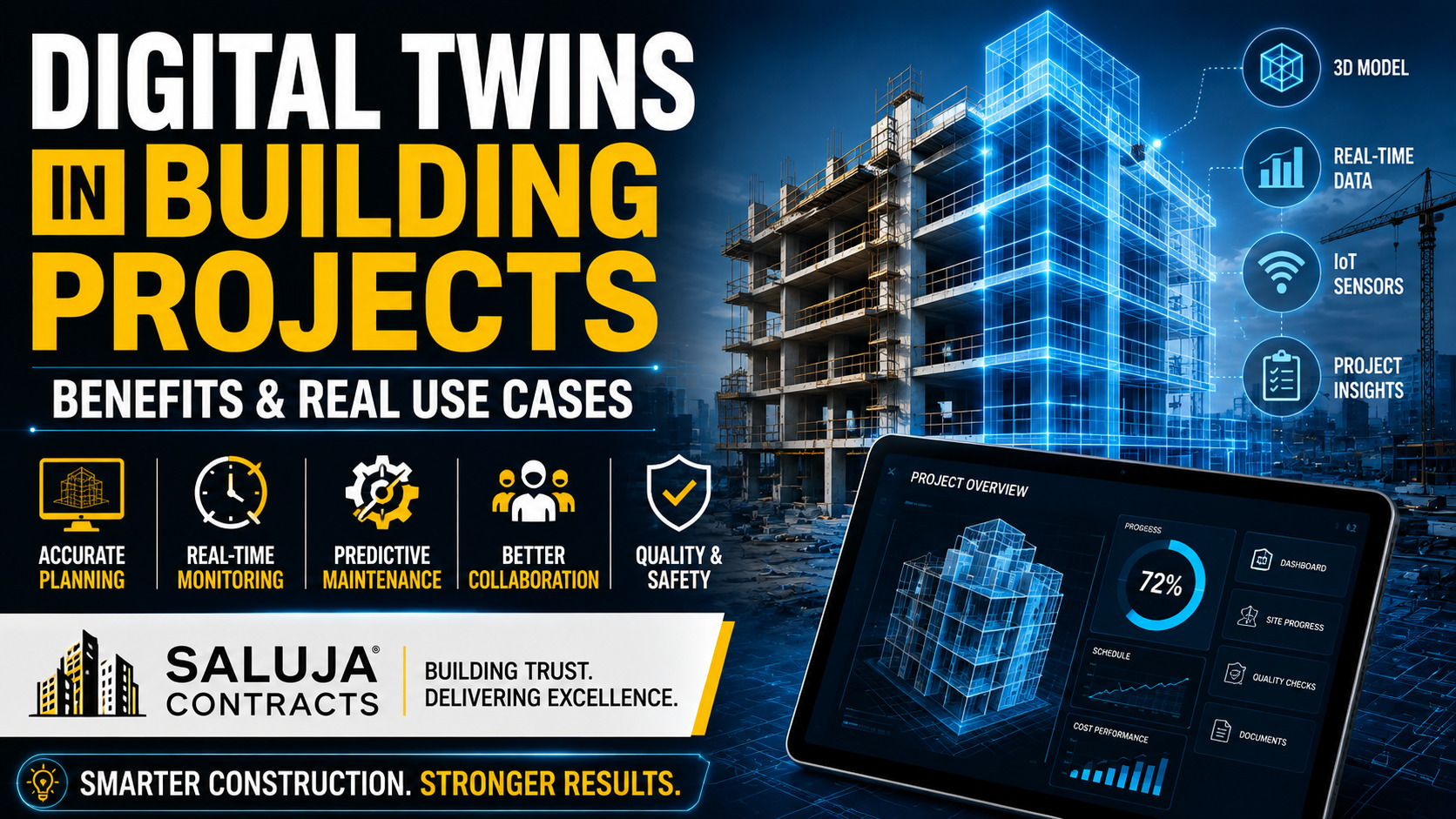
Digital Twins in Construction: Benefits, Applications & Real-World Use Cases
Construction is moving from drawings and periodic site reports toward connected, data-driven project management.
One technology at the centre of this shift is the Digital Twin.
For complex schools, institutional buildings, commercial spaces and industrial facilities, a Digital Twin can connect digital models with project information, site updates, equipment data and operational information.
The result is better visibility into what is being designed, constructed and eventually operated.
What Is a Digital Twin in Construction?
A Digital Twin is a digital representation of a physical asset that can be continuously updated using relevant project or operational data.
It is important to understand the difference between a normal 3D model, BIM and a Digital Twin.
- 3D Model: A visual representation of the building or structure.
- BIM: A structured digital information model containing geometry and project information.
- Digital Twin: A connected digital representation that can incorporate current information from the physical asset and support monitoring, analysis and decision-making.
Depending on the project, a Digital Twin may combine:
- BIM models
- Construction progress information
- Equipment and asset data
- IoT sensor information
- Inspection records
- Maintenance information
- Operational data
This makes the digital model more useful than a drawing that simply represents what the building is supposed to look like.
Why Digital Twins Matter in Modern Construction
Construction projects involve hundreds of decisions across design, procurement, execution, quality control and handover.
When information is scattered across drawings, spreadsheets, emails, inspection reports and separate project-management systems, teams can struggle to understand the current status of the project.
A connected Digital Twin can help bring relevant information together and provide a clearer picture of project conditions.
This can support:
- Better planning
- Improved coordination
- Project progress monitoring
- Quality documentation
- Asset management
- Data-driven decision-making
5 Key Benefits of Digital Twins in Building Projects
1. Better Planning and Design Coordination
Digital models can help project teams identify clashes and coordination issues before construction reaches the affected area.
For example, structural, architectural and MEP systems can be reviewed together to identify potential conflicts.
This can reduce unnecessary redesign and help teams make better decisions before work begins on site.
The real advantage is not simply seeing the building in 3D—it is identifying problems before they become physical problems.
2. Improved Construction Progress Monitoring
A Digital Twin can be connected with project schedules, inspection records, photographs, site observations and other progress information.
This allows project teams to compare planned progress with actual site conditions.
For clients who cannot visit the site every day, structured digital reporting can provide greater visibility into:
- Completed work
- Pending activities
- Upcoming milestones
- Quality inspections
- Potential delays
This approach can complement the regular site supervision and project scheduling process.
3. Better Coordination Between Project Teams
Architects, structural engineers, MEP consultants, project managers and site teams often work with different information at different stages.
A coordinated digital environment can help reduce information gaps by giving stakeholders access to the latest approved project information.
This becomes particularly valuable when multiple disciplines are working simultaneously.
4. Quality and Construction Documentation
Digital Twins can also support construction quality management by linking physical building elements with inspection and documentation records.
For example, information related to an element could potentially include:
- Inspection status
- Material information
- Installation records
- Photographs
- Testing documentation
- Approval status
This creates better traceability throughout the construction process.
Importantly, digital technology does not replace physical inspections, testing or engineering approvals. It helps organize and connect the information generated by those processes.
5. Building Operations and Predictive Maintenance
The value of a Digital Twin does not necessarily end when construction is completed.
For buildings equipped with appropriate sensors and connected systems, operational data can be used to monitor equipment performance, energy consumption and maintenance requirements.
For example, facility teams may use connected information to identify unusual equipment behaviour or maintenance requirements before a failure causes major disruption.
This is particularly relevant for large schools, commercial buildings, industrial facilities and institutional campuses.
Real-World Digital Twin Use Cases
🏫 School and Institutional Buildings
Schools and institutional buildings contain multiple systems that must work together, including classrooms, electrical systems, HVAC, fire safety, plumbing and other building services.
A connected digital information environment can help teams coordinate these systems and maintain better records throughout the building lifecycle.
For large educational campuses, this can also support future renovation, expansion and maintenance planning.
🏢 Commercial Buildings
Commercial buildings can use Digital Twin technology to connect building information with operational systems.
Potential applications include:
- Energy monitoring
- HVAC performance tracking
- Equipment management
- Space management
- Maintenance planning
🏭 Industrial Facilities
Industrial projects can benefit from detailed digital representations because they often contain complex equipment, utilities, structural systems and operational requirements.
Digital Twins can support asset visibility, maintenance planning and operational decision-making when the necessary data infrastructure is available.
Digital Twin vs BIM: Are They the Same?
No.
BIM and Digital Twins are closely related, but they are not identical.
| Feature | BIM | Digital Twin |
|---|---|---|
| 3D Building Model | Yes | Usually |
| Structured Building Information | Yes | Yes |
| Live / Current Data | Not necessarily | Can be connected |
| IoT Integration | Optional | Often important |
| Operational Monitoring | Limited by itself | Potentially extensive |
| Lifecycle Management | Can support it | Strong use case |
In simple terms: BIM can describe the building and its information. A Digital Twin aims to connect that digital representation with the changing physical asset and its data.
How Digital Twins Can Improve Construction Decision-Making
The biggest opportunity isnt simply creating a sophisticated 3D model.
The real value comes from connecting information to decisions.
For example:
- Design issue → identify the problem before construction.
- Site progress → compare planned and actual progress.
- Quality inspection → connect records to specific building elements.
- Equipment data → identify unusual operating behaviour.
- Maintenance information → plan interventions before failures become costly.
This changes the role of technology from simply “showing the building” to helping teams make better decisions about the building.
How Saluja Contracts Is Moving Toward Smarter Construction
At Saluja Contracts, our approach combines structured project planning, site supervision, quality control and digital project information to improve construction execution.
With more than 150 completed projects, our experience includes commercial, institutional, educational and other construction projects across Delhi NCR. :contentReference[oaicite:2]{index=2}
Digital construction technologies can complement this experience by helping teams improve:
- Project visibility
- Construction coordination
- Documentation
- Quality tracking
- Progress reporting
- Decision-making
Explore our construction projects and capabilities to understand our approach to project execution.
What Digital Twins Cannot Do
Digital Twin technology is powerful, but it is not a replacement for experienced engineers, site supervision or physical quality inspections.
A sophisticated model cannot automatically correct:
- Poor workmanship
- Incorrect material installation
- Bad site practices
- Unapproved design changes
- Inadequate supervision
The quality of the output is also dependent on the quality of the information entering the system.
A perfect digital model based on outdated or incorrect information can still produce poor decisions.
That is why technology must be combined with disciplined site execution and professional engineering judgement.
The Future of Digital Construction in India
As construction projects become more complex, the ability to connect design, construction and operational information will become increasingly important.
Digital Twins can become part of a broader digital construction ecosystem involving:
- BIM
- IoT sensors
- Cloud collaboration
- AI-assisted analysis
- Drone and site imaging
- Digital project management
- Predictive maintenance
The objective should not be to adopt technology simply because it is new.
The objective should be to use the right technology to solve a real project problem.
Frequently Asked Questions About Digital Twins in Construction
What is a Digital Twin in construction?
A Digital Twin is a digital representation of a physical building or asset that can be connected to current project or operational data to support monitoring, analysis and decision-making.
Is a Digital Twin the same as BIM?
No. BIM provides structured digital information about a building, while a Digital Twin typically adds connections to current physical or operational data.
Can Digital Twins be used during construction?
Yes. They can support construction progress monitoring, coordination, quality documentation and decision-making when the required data and workflows are available.
Can Digital Twins help after building completion?
Yes. When connected to appropriate building systems and sensors, Digital Twins can support asset management, energy monitoring and predictive maintenance.
Are Digital Twins useful for schools?
They can be particularly useful for larger educational facilities where multiple building systems, maintenance requirements and future expansion activities need to be coordinated.
Smarter Construction Starts With Better Information
Digital Twins are not simply about creating impressive 3D models.
The real opportunity is to connect information from design, construction and building operations so project teams can make better decisions throughout the building lifecycle.
For contractors, architects, facility managers and building owners, this can mean better visibility, improved coordination and more informed decision-making.
Planning a school, commercial building, institutional facility or industrial project?
Contact Saluja Contracts to discuss your construction requirements and explore a project approach focused on quality, transparency and efficient execution.