.jpg)
Concrete Repair: What Exposed and Corroded Reinforcement Tells Us About Building Maintenance
Concrete repair is an important part of maintaining the safety, durability, and service life of a building. When concrete starts cracking, spalling, or exposing reinforcement steel, it should not be treated as simply a cosmetic problem.
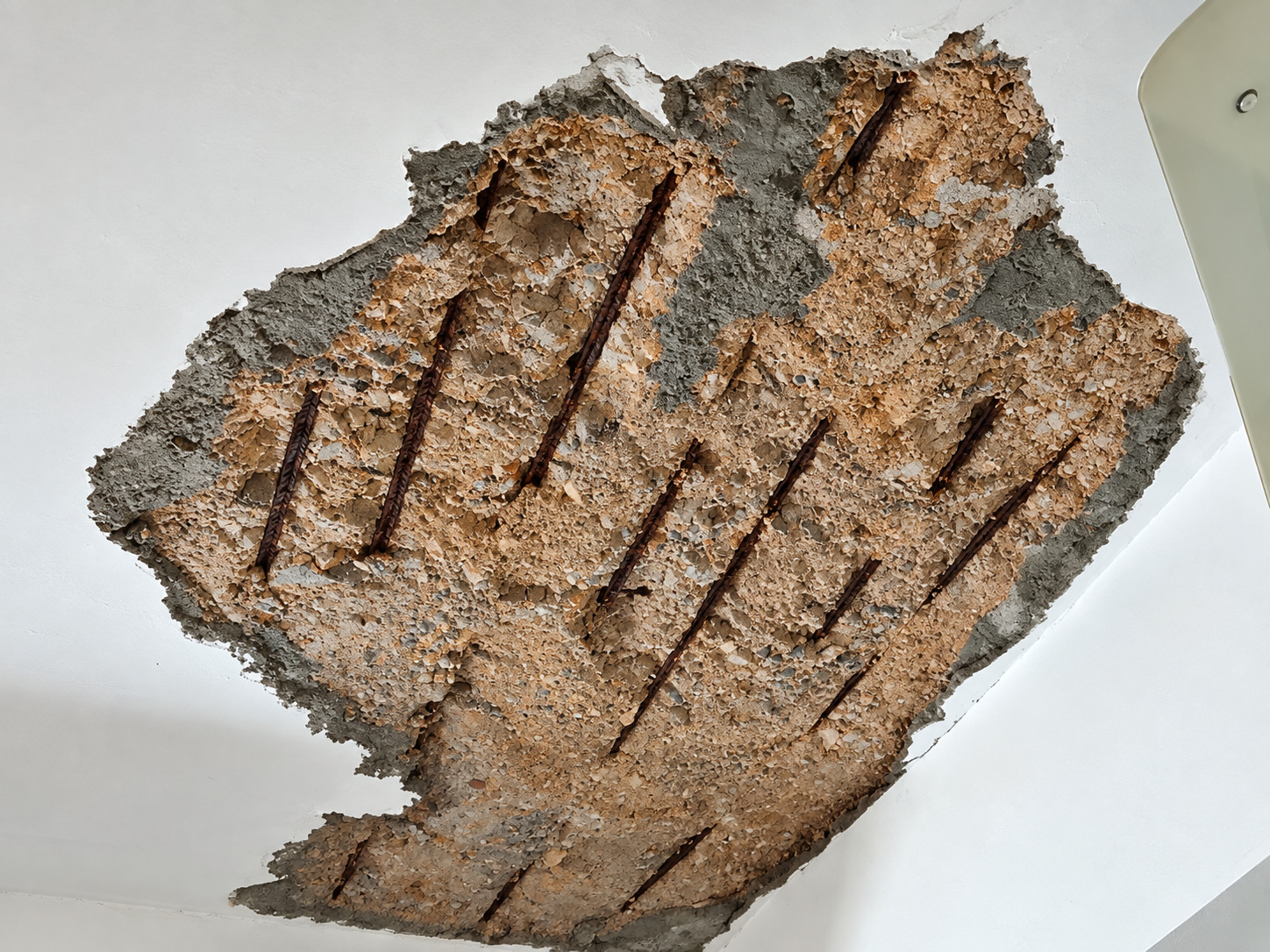
The image in this article shows a section of deteriorated concrete where reinforcement has become exposed. Situations like this can be associated with moisture exposure, reinforcement corrosion, inadequate concrete cover, construction-related issues, or long-term deterioration.
The correct repair approach depends on the actual condition of the structure and the cause of the deterioration.
What Is Concrete Deterioration?
Concrete deterioration refers to the gradual loss of concrete quality, integrity, or protective properties over time. It can appear as cracks, spalling, delamination, surface deterioration, dampness, rust staining, or exposed reinforcement.
Early identification of these problems can help property owners address the underlying cause before deterioration becomes more extensive.
For professional assessment, property owners can consider a Building Health Check-up to identify visible signs of deterioration and potential areas requiring further investigation.
Why Does Reinforcement Become Exposed?
Reinforcement steel is normally surrounded by concrete, which provides protection against environmental exposure. When concrete deteriorates, this protection can be reduced and reinforcement may become exposed.
1. Water Seepage and Moisture
Persistent moisture can contribute to concrete deterioration and reinforcement corrosion. Water may enter through roofs, terraces, plumbing leaks, bathrooms, cracks, joints, or areas where waterproofing has failed.
If the source of water ingress is not addressed, repairing only the damaged concrete may not provide a long-term solution.
2. Reinforcement Corrosion
When reinforcement steel corrodes, the corrosion products can occupy greater volume than the original steel. This can create pressure within the surrounding concrete and contribute to cracking, delamination, and concrete spalling.
Eventually, sections of concrete may break away and expose the reinforcement underneath.
3. Inadequate Concrete Cover
Concrete cover helps protect reinforcement from environmental exposure. If the cover is inadequate or has deteriorated, the reinforcement can become more vulnerable to corrosion.
Proper reinforcement placement, concrete quality, curing, and construction practices are important factors in the long-term durability of RCC structures.
4. Poor Construction Practices
Concrete durability can also be affected by construction-related issues, including:
- Poor concrete compaction
- Inadequate curing
- Improper reinforcement placement
- Insufficient concrete cover
- Improper water addition
- Poor workmanship
Common Warning Signs of Concrete Damage
Building owners, facility managers, and property managers should pay attention to visible signs of concrete deterioration.
- Cracks in concrete surfaces
- Rust stains
- Exposed reinforcement bars
- Loose or falling concrete
- Concrete spalling
- Recurring water seepage
- Damp patches
- Visible reinforcement corrosion
- Areas of delaminated concrete
A photograph alone cannot establish the structural significance of deterioration. Where structural elements are involved, a qualified structural professional may need to assess the condition before repair work is specified.
What Is the Correct Concrete Repair Process?
Proper concrete repair should address both the visible deterioration and its underlying cause.
Step 1: Inspect the Damaged Area
The first step is to inspect the affected area and understand the location, extent, and possible cause of deterioration.
Step 2: Remove Loose or Damaged Concrete
Loose, weak, or deteriorated concrete should be removed carefully until a suitable sound substrate is reached.
Step 3: Assess the Reinforcement
Where reinforcement is exposed, its condition should be assessed for corrosion and any loss of steel section. Additional structural intervention may be required depending on the actual condition.
Step 4: Treat the Reinforcement
Appropriate cleaning and corrosion-protection measures can be selected according to the condition of the reinforcement and the specified repair system.
Step 5: Repair the Concrete
A suitable concrete repair material or repair system should be selected according to the repair depth, substrate condition, location, and project requirements.
Step 6: Fix the Root Cause
Repairing the concrete without addressing the source of deterioration can result in recurring problems.
For example, if water ingress is contributing to deterioration, the source of the water should also be investigated and addressed.
Why You Should Not Simply Cover Damaged Concrete
Applying plaster, putty, or paint over deteriorated concrete may improve the appearance temporarily, but it does not necessarily solve the underlying problem.
A better approach is to follow a structured process:
Identify the Cause → Assess the Condition → Repair → Protect → Prevent
Building Maintenance and Regular Inspections
Regular building maintenance can help identify visible problems before they develop into larger repair requirements.
A building health assessment can help identify issues such as cracks, leaks, deterioration, and other areas that may require attention.
Learn more about Saluja Contracts Building Health Check-up →
Concrete Repair for Commercial and Institutional Buildings
Commercial and institutional properties often require regular maintenance because of their continuous use and the number of people occupying them.
Saluja Contracts works across construction and renovation requirements, including commercial and institutional projects. The companys website states that it specializes in institutional and commercial building construction and has executed projects across different building types.
Learn more about Saluja Contracts →
When Should You Get a Building Inspection?
Consider arranging an inspection when you notice:
- New or expanding cracks
- Exposed reinforcement
- Rust marks on concrete
- Falling pieces of concrete
- Repeated water seepage
- Visible dampness
- Concrete spalling
- Unusual deterioration around structural elements
Early investigation can help determine whether the issue is primarily related to maintenance, moisture, concrete deterioration, or whether further structural assessment is required.
Conclusion
Exposed reinforcement is more than a surface-level issue. It can be a visible indication that the surrounding concrete has deteriorated and that the area requires proper investigation.
Instead of simply covering the affected area, the repair process should focus on identifying the cause, assessing the condition, selecting the appropriate repair system, and addressing factors that could lead to recurring deterioration.
At Saluja Contracts, we provide construction, renovation, and building-related services for residential, commercial, and institutional requirements.
Need a Building Health Check-up?
Found cracks, exposed reinforcement, concrete deterioration, or water seepage in your building?
Speak with the Saluja Contracts team about your project requirements.
Contact Saluja Contracts