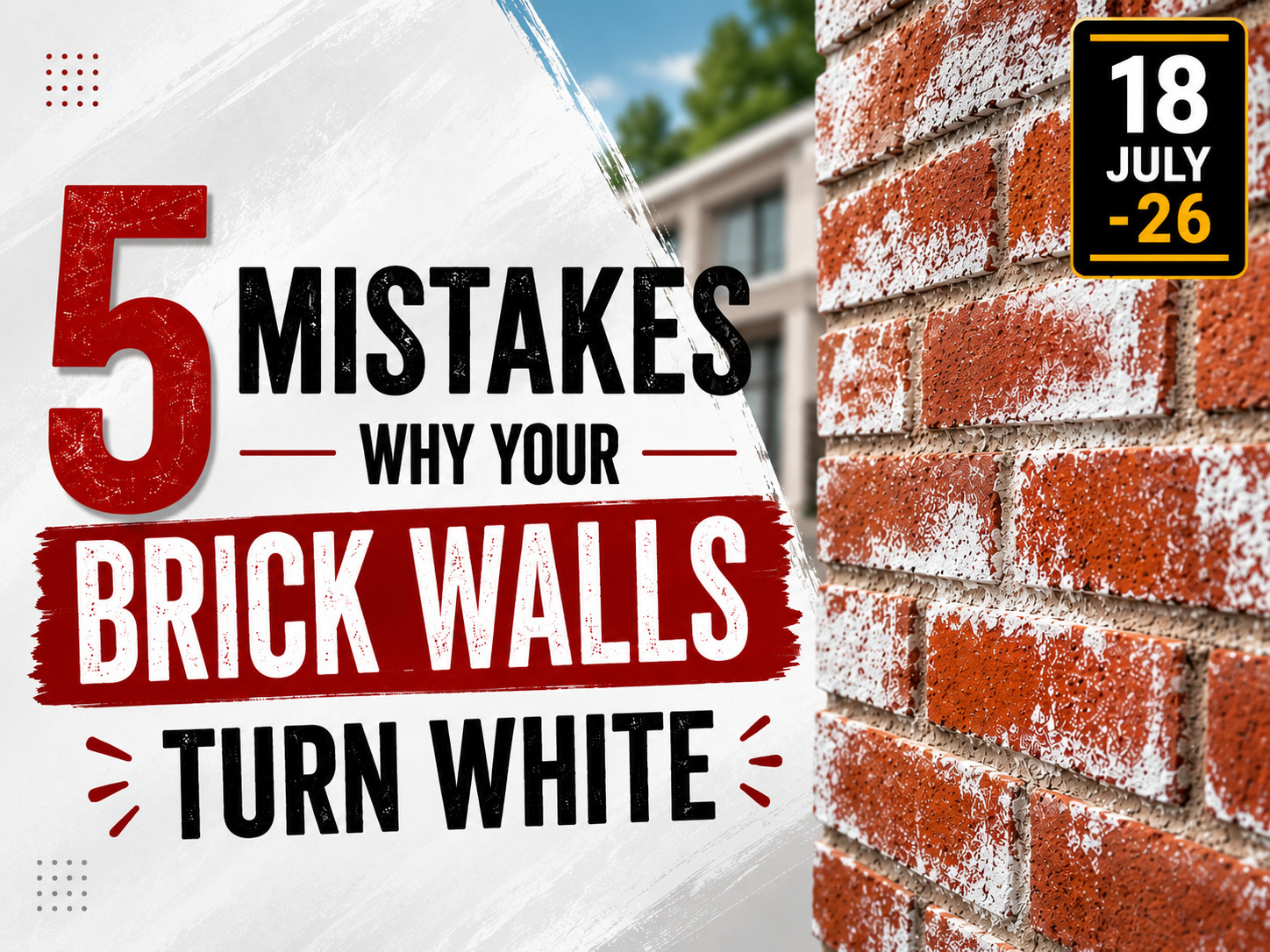
5 Common Reasons Why Brick Walls Turn White (Efflorescence)
You build a fresh brick wall, everything looks perfect, and the finish is exactly as expected.
But after a few months, white powdery patches begin appearing on the surface.
Most people assume its dust, poor paint quality, or cement residue.
In reality, these white deposits are usually caused by Efflorescence—one of the most common moisture-related issues in masonry construction.
Although efflorescence rarely affects structural strength directly, it indicates that moisture is travelling through your walls. If ignored, it can eventually lead to dampness, paint peeling, plaster damage, and costly repairs.
What is Efflorescence?
Efflorescence is a white, powder-like deposit that forms when water dissolves natural salts inside bricks, mortar, or concrete. As the moisture reaches the wall surface and evaporates, these salts remain behind as white stains.
According to the Portland Cement Association, controlling moisture movement is one of the most effective ways to prevent efflorescence in masonry structures.
5 Common Mistakes That Cause Brick Walls to Turn White
1. Using Bricks with High Salt Content
Low-quality bricks often contain excessive soluble salts. When these salts combine with moisture, they migrate to the wall surface and create white deposits.
Prevention: Always use high-quality bricks that comply with industry standards.
2. Excess Water During Construction
Adding too much water while mixing mortar or during curing increases moisture movement within the wall.
As the wall dries, dissolved salts are carried to the surface.
Prevention: Maintain the correct water-cement ratio and follow proper curing practices.
3. Poor Waterproofing
Water entering from roofs, bathrooms, balconies, or external walls allows salts to continuously move through the masonry.
This often results in repeated efflorescence.
Prevention: Invest in proper waterproofing systems during construction rather than repairing problems later.
Learn more about our Construction Services for long-lasting building solutions.
4. Incorrect Mortar Mix Ratio
A weak mortar mix absorbs more moisture and reduces the walls durability.
Improper proportions also increase the likelihood of moisture penetration.
Prevention: Always follow the recommended mortar mix ratio based on the project specifications.
5. Poor Drainage and Moisture Control
Water accumulation near foundations, external walls, or landscaping creates continuous dampness.
Over time, this becomes one of the biggest causes of efflorescence.
Prevention: Ensure proper site drainage and prevent water from collecting around walls.
How to Prevent Efflorescence
- Use premium-quality bricks and construction materials.
- Maintain proper mortar proportions.
- Avoid excessive water during construction.
- Install effective waterproofing systems.
- Provide proper site drainage.
- Inspect walls regularly for early signs of moisture.
Why Proper Construction Practices Matter
Efflorescence may appear to be a cosmetic issue, but it often signals an underlying moisture problem.
Ignoring these early signs can lead to:
- Paint peeling
- Wall dampness
- Plaster damage
- Mold growth
- Higher maintenance costs
Professional planning and quality workmanship significantly reduce these risks.
Why Choose Saluja Contracts?
At Saluja Contracts, we believe quality construction goes beyond appearance.
We focus on durability, moisture protection, structural quality, and long-term performance in every project.
Our expertise includes:
- Commercial Construction
- Institutional Buildings
- Industrial Projects
- Educational Infrastructure
- Office Renovation
- Turnkey Construction Solutions
Explore our completed construction projects to see how we deliver quality projects across Delhi NCR.
Frequently Asked Questions
Is efflorescence harmful to buildings?
Efflorescence itself is usually not structurally harmful, but it indicates moisture movement inside the wall. If left untreated, the underlying moisture can cause long-term damage.
Can efflorescence be removed?
Yes. Mild efflorescence can often be removed with dry brushing or appropriate masonry cleaners, but the source of moisture must also be fixed.
Can waterproofing prevent efflorescence?
Yes. Proper waterproofing significantly reduces water penetration, making efflorescence much less likely.
Build for the Long Term
Small construction mistakes today can become expensive maintenance problems tomorrow.
Choosing experienced professionals, quality materials, and proper construction techniques helps protect your investment for years to come.
Planning your next commercial, institutional, or industrial project?
Contact Saluja Contracts today for expert construction solutions designed for quality, durability, and long-term performance.