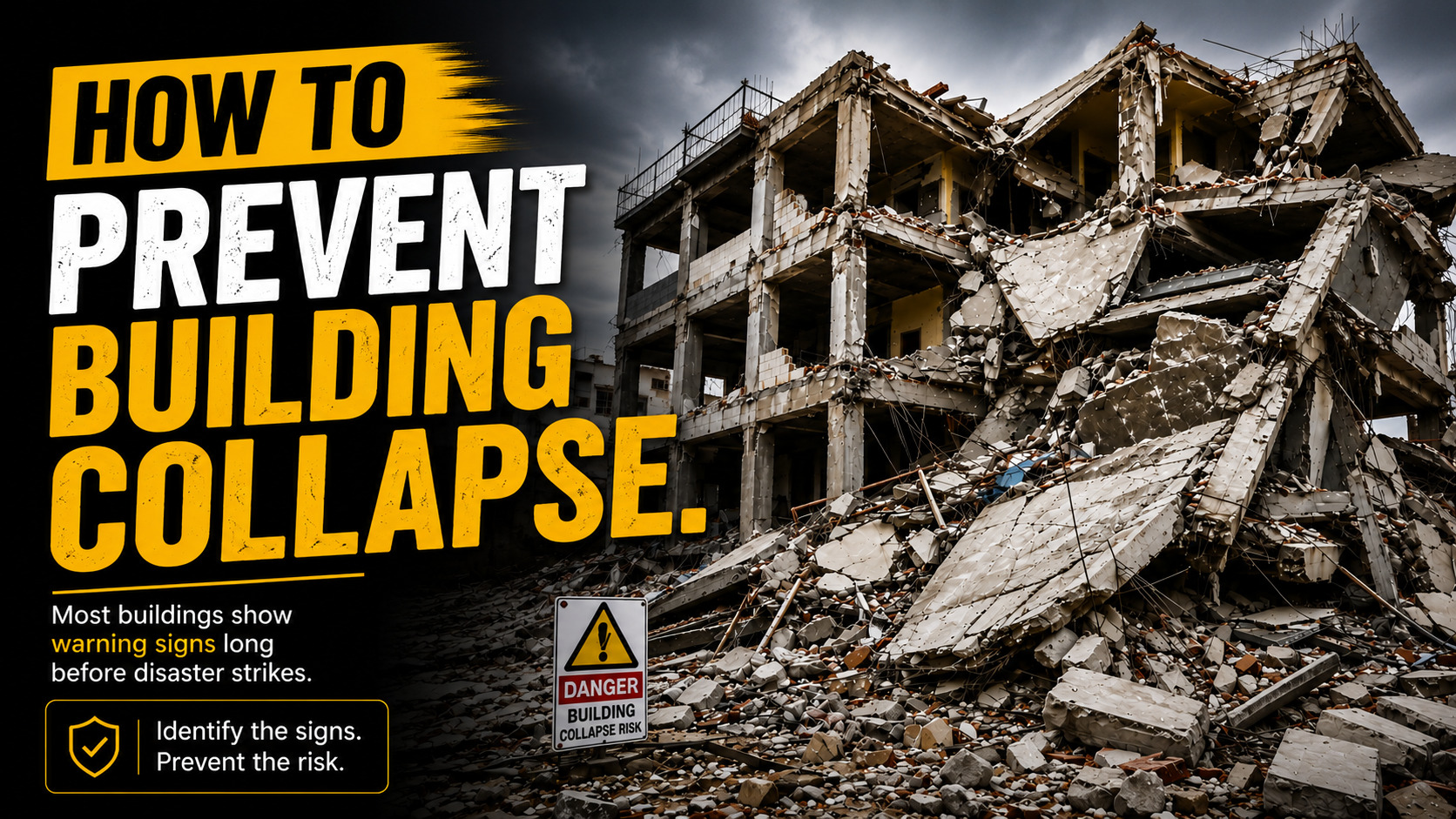
3 Warning Signs Before a Building Collapse: What Every Property Owner Should Know
Most buildings dont collapse overnight.
Before a serious structural failure occurs, buildings usually show warning signs that should never be ignored.
Visible cracks, sagging floors, and continuous water seepage may appear minor at first—but they can indicate deeper structural problems that threaten both safety and long-term durability.
Whether you own a commercial building, school, office, industrial facility, or residential property, identifying these warning signs early can help prevent expensive repairs and protect lives.
Why Early Detection Is Important
Buildings naturally experience wear and tear over time. However, certain changes indicate structural distress rather than normal ageing.
Ignoring these issues may result in:
- Structural weakening
- Higher repair costs
- Water damage
- Reduced property value
- Safety risks for occupants
Regular inspections and timely maintenance are always more cost-effective than major structural repairs.
1. Visible Cracks in Structural Members
Not every crack is dangerous, but cracks in structural elements should always be evaluated by professionals.
Pay special attention to cracks appearing in:
- Columns
- Beams
- Slabs
- Load-bearing walls
If cracks continue to widen or appear repeatedly, they may indicate settlement, excessive loading, poor construction quality, or reinforcement problems.
Recommendation: Arrange a structural inspection before the damage worsens.
2. Sagging Floors, Beams, or Roofs
A floor or beam should remain level throughout its service life.
If you notice sagging ceilings, deflected beams, sloping floors, or balconies that appear to be sinking, the building may be experiencing excessive structural loading or material deterioration.
Possible causes include:
- Overloading
- Poor construction practices
- Weak structural members
- Material ageing
Ignoring these signs can significantly increase structural risk.
3. Water Seepage and Reinforcement Corrosion
Water leakage is more than a cosmetic issue.
Continuous moisture allows steel reinforcement inside concrete to corrode.
As steel rusts, it expands and creates internal pressure, causing the surrounding concrete to crack and weaken.
Common warning signs include:
- Persistent damp walls
- Rust stains
- Concrete spalling
- Peeling plaster
- Water leakage from slabs or ceilings
Proper waterproofing and timely repairs help prevent long-term structural damage.
Building Safety Checklist
Property owners should regularly inspect for:
- ✔ Deep structural cracks
- ✔ Sagging beams or slabs
- ✔ Water seepage
- ✔ Rust stains on concrete
- ✔ Loose concrete or plaster
- ✔ Foundation settlement
How Regular Structural Audits Protect Your Investment
Professional building inspections help identify problems before they become serious.
A structural audit can:
- Improve building safety
- Reduce long-term repair costs
- Extend building lifespan
- Maintain property value
- Ensure occupant safety
Why Choose Saluja Contracts?
At Saluja Contracts, we believe that quality construction doesnt end when a project is completed.
Long-term performance depends on proper engineering, quality workmanship, and regular maintenance.
Our expertise includes:
- Commercial Construction
- Industrial Construction
- Institutional Buildings
- School Construction & Renovation
- Office Renovation
- Structural Repair & Strengthening
- Turnkey Construction Projects
Explore our completed construction projects to see our commitment to quality and engineering excellence.
Learn more about our construction services for commercial, industrial, and institutional projects.
Industry Standards and Structural Safety
Routine inspections should follow recognised engineering standards and be carried out by qualified professionals.
For information about Indian construction standards, visit the Bureau of Indian Standards (BIS), which publishes codes used across the construction industry.
Frequently Asked Questions
Are all wall cracks dangerous?
No. Small surface cracks may be cosmetic, but cracks in structural elements such as columns, beams, slabs, or load-bearing walls should always be inspected.
Can water seepage weaken a building?
Yes. Continuous water seepage can corrode steel reinforcement inside concrete, reducing structural strength over time.
How often should a building undergo a structural inspection?
Commercial, institutional, and older buildings should be inspected periodically, especially if visible signs of distress or water damage are present.
Protect Your Building Before Problems Grow
Most structural failures provide warning signs long before they become dangerous.
Recognising these signs early, carrying out regular inspections, and acting quickly can save lives, reduce repair costs, and protect your investment.
Planning a new project or concerned about the condition of an existing building?
Contact Saluja Contracts today for expert construction, structural evaluation, and renovation solutions built on quality, safety, and engineering excellence.